Themis-X — MyTravelConnect
Designing, in a matter of weeks, a platform that lets travellers with disabilities share their accessibility needs securely throughout their trip.
- Sector
- Travel · Data space · Accessibility
- Engagement
- Build your product
- Timeline
- March → September 2024
- Expertise
- Product design & complex interfaces · Product architecture & engineering
Context
In the spring of 2024, Themis-X was working inside the EONA-X ecosystem on a particularly concrete use case for data sharing: letting people with reduced mobility prepare their journey without having to send the same information again to every service involved in their trip.
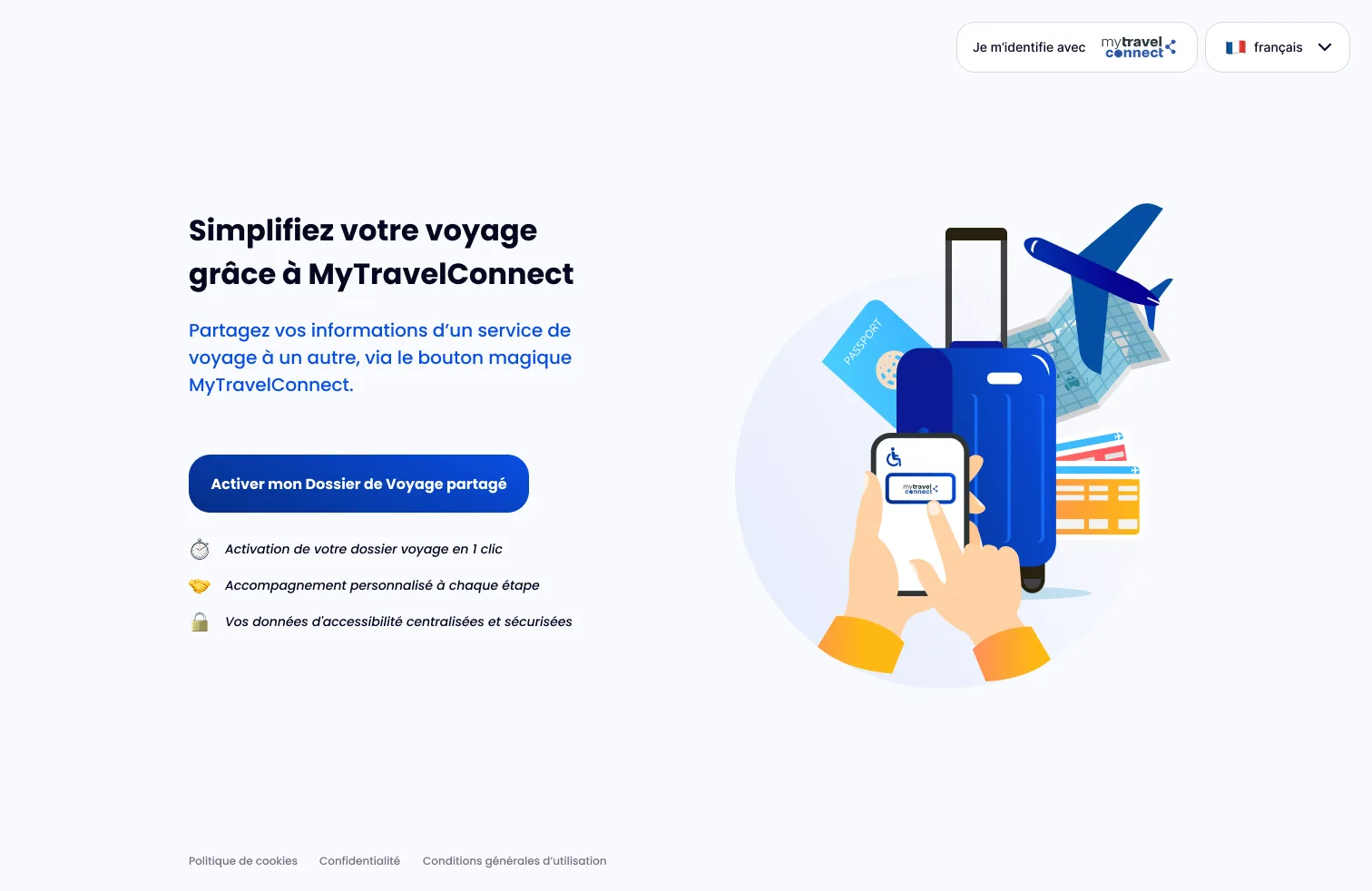
The principle behind MyTravelConnect is simple. Travellers fill in their personal information and their accessibility needs once, then decide precisely which data they want to share with an airline, an airport, a transport operator, a hotel or any other service along the way.
Behind that simple experience sits a far more structural problem: allowing several independent organisations to exchange personal data securely, in an interoperable way, and always subject to the user’s consent.
The project was part of the momentum around the Paris 2024 Olympic and Paralympic Games, with the support of Atout France and the EONA-X ecosystem. Themis-X needed to turn that vision quickly into a first version complete enough to be tested, demonstrated and presented to the various players in the travel industry.
Vezero took the product end to end, from the design of the experience through to the infrastructure and the integration with the data space.
Our approach
The first step was to make a technically complex subject as simple as possible for the person using it.
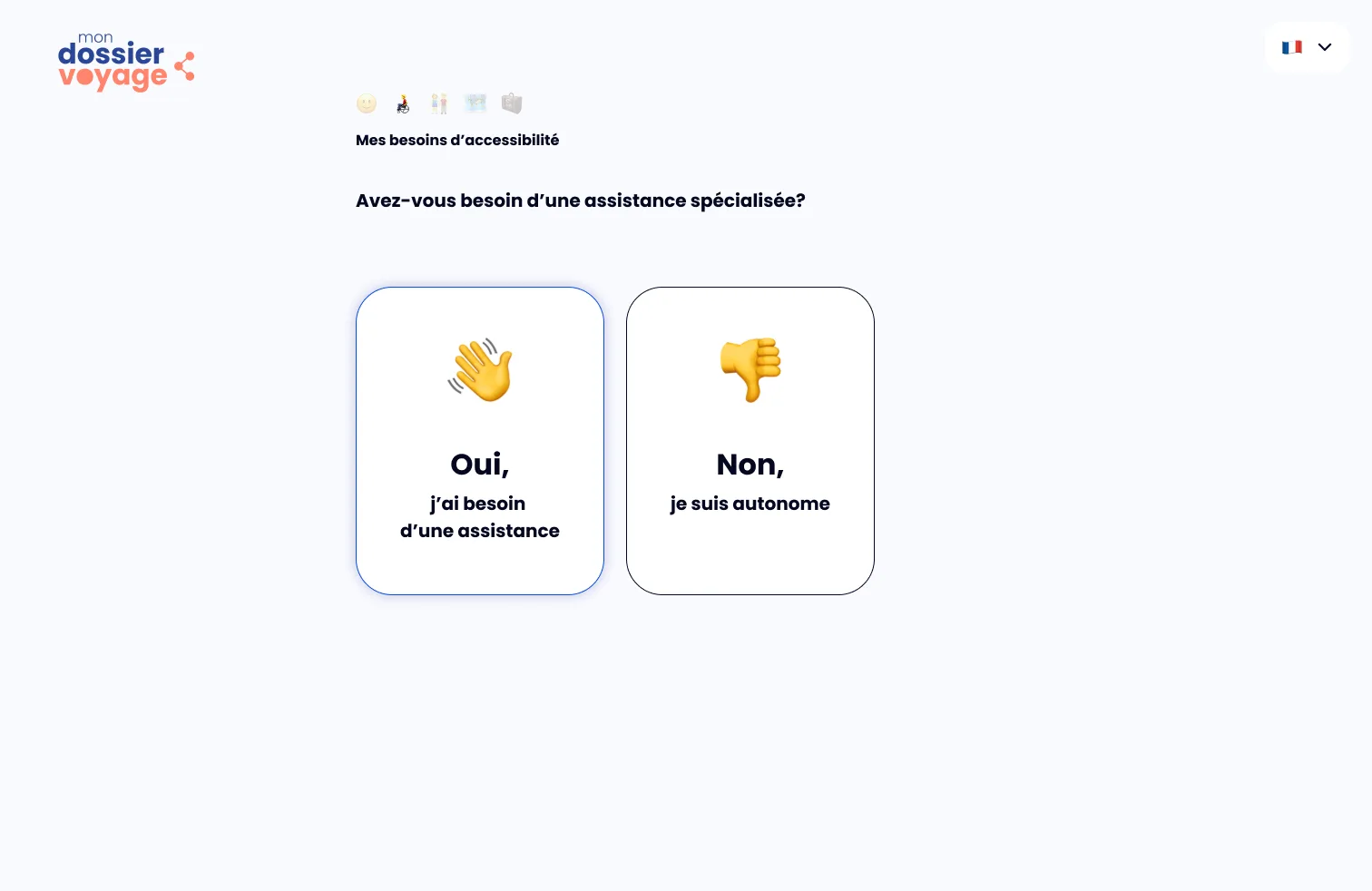
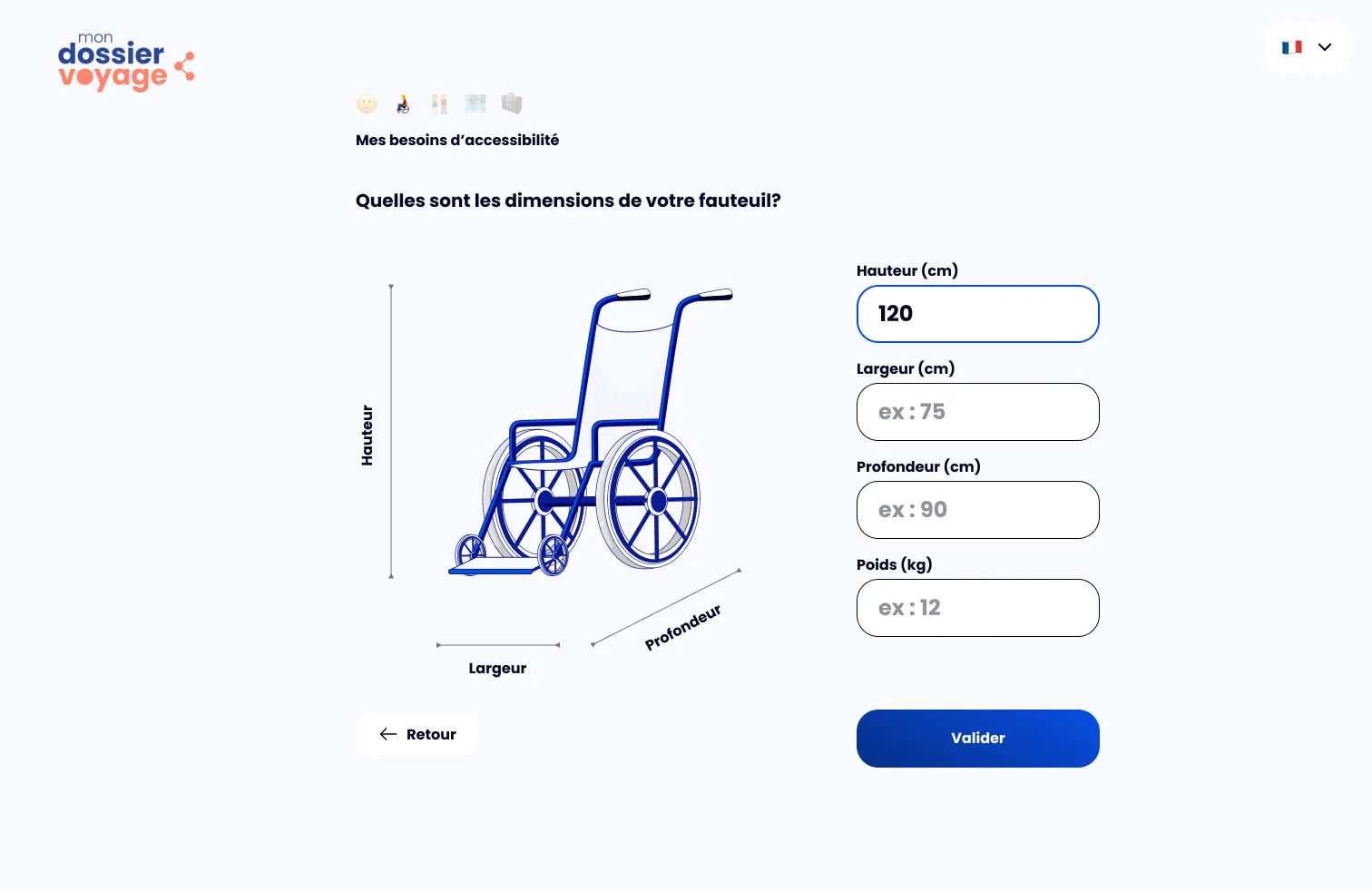
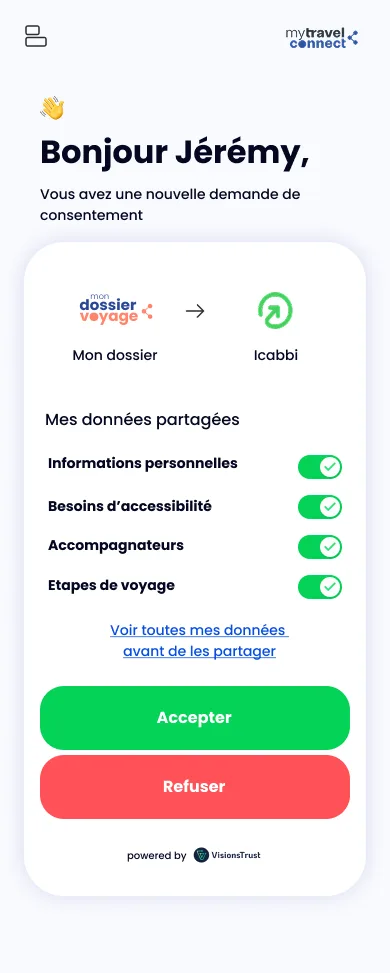
Sylvain designed the desktop and mobile journeys around one principle: ask only for what is needed, explain clearly why the information is being collected, and never share a piece of data without explicit consent. Someone can describe their profile, their assistance needs or the characteristics of their equipment step by step, without having to understand how the underlying data space works.
In parallel, we built the whole application: frontend, backend, authentication, data model, APIs, infrastructure and consent management.
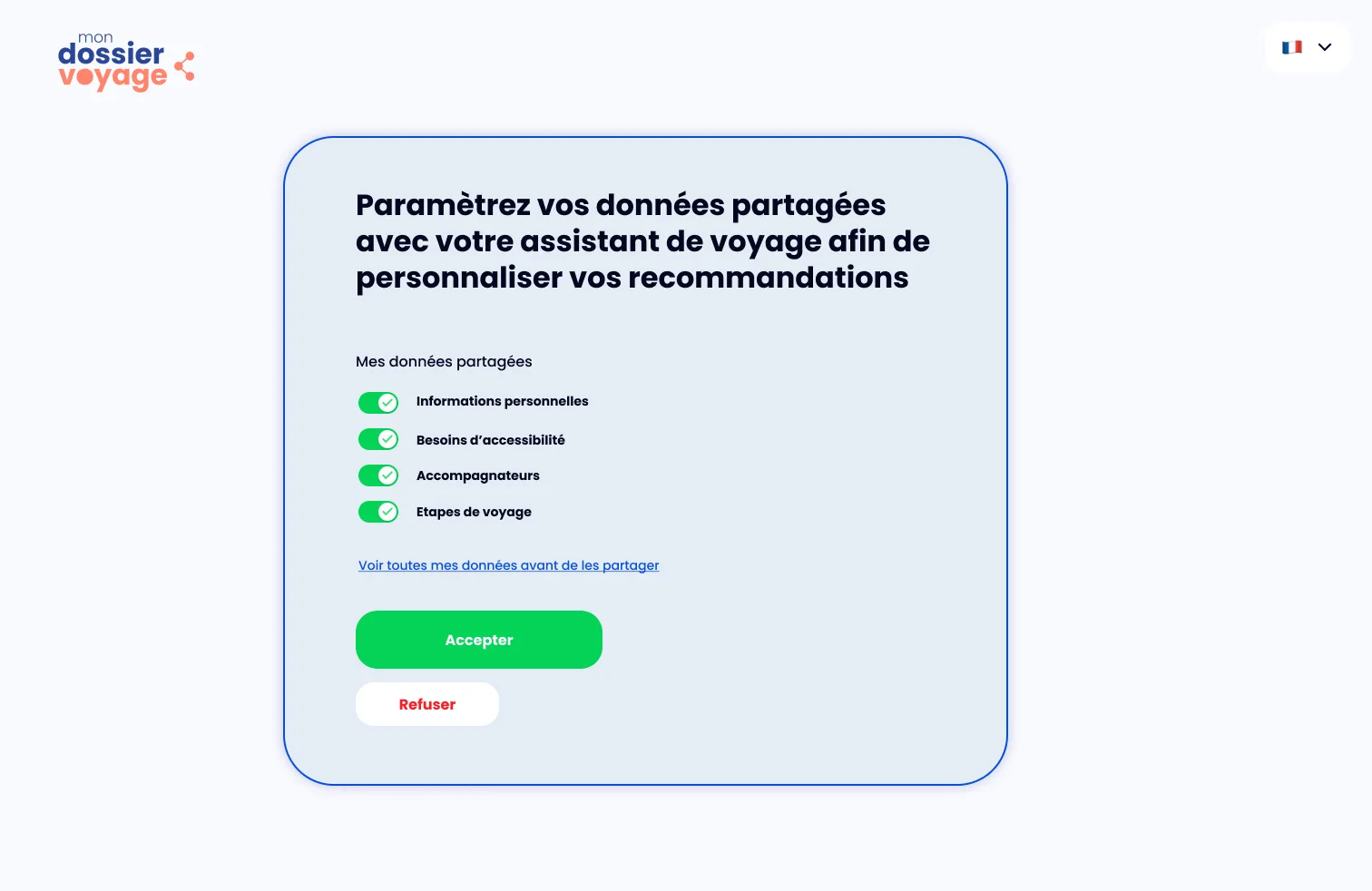
To connect MyTravelConnect to the EONA-X ecosystem, we also deployed and hosted a connector based on the open-source Prometheus-X stack, then registered it with VisionsTrust. VisionsTrust centralises consent and data exchanges between the different players; MyTravelConnect remains responsible for the user experience and for the system that prepares the information to be shared.
From a use case to an experience people can actually use
A first designed and prototyped version was delivered in April 2024. By May, the full application was online and could be presented to the EONA-X ecosystem.
From data sharing to a continuous travel experience
Once MyTravelConnect was available, the next step was to show what that data sharing could make possible when another player in the ecosystem connected to the service. We built a proof of concept with Aéroports de Paris illustrating a complete journey.
On arriving at the airport, a traveller can share with the agent meeting them the information needed to look after them: assistance requirements, type of wheelchair or other accessibility constraints. The agent immediately has what they need, without asking the traveller to fill anything in again.
They can then book a taxi and pass on, in turn and with the user’s consent, only the information the transport company needs.
Entered once, used by several organisations
The same principle can then be extended to the other services of a trip: rail transport, hotels, activities, or anything that needs to know about certain accessibility constraints.
What we delivered
The engagement covered the product end to end, from the design of the experience through to the integration with the data space.
A complete desktop and mobile experience
We designed and then built every journey a traveller needs to create their file and fill in, step by step, the information their trip requires.
The design had to stay accessible, direct and easy to understand, while still collecting information that is sometimes very precise.
A full application
Vezero covered the frontend, the backend, authentication, user management, the data model and storage, the APIs, the infrastructure and the internationalisation of the experience.
An integration with the data space
We deployed and hosted the Prometheus-X connector that lets MyTravelConnect communicate with the ecosystem, then handled its registration with VisionsTrust.
The consent mechanisms were built directly into the user journeys, so that every act of sharing stays explicit and under control.
An end-to-end demonstration with ADP
The proof of concept run with Aéroports de Paris showed concretely how accessibility data could follow a traveller from one player in the travel industry to the next.
The point was no longer to prove that data sharing was technically possible, but to show what it is worth in a real situation.
An extension into tourism recommendations
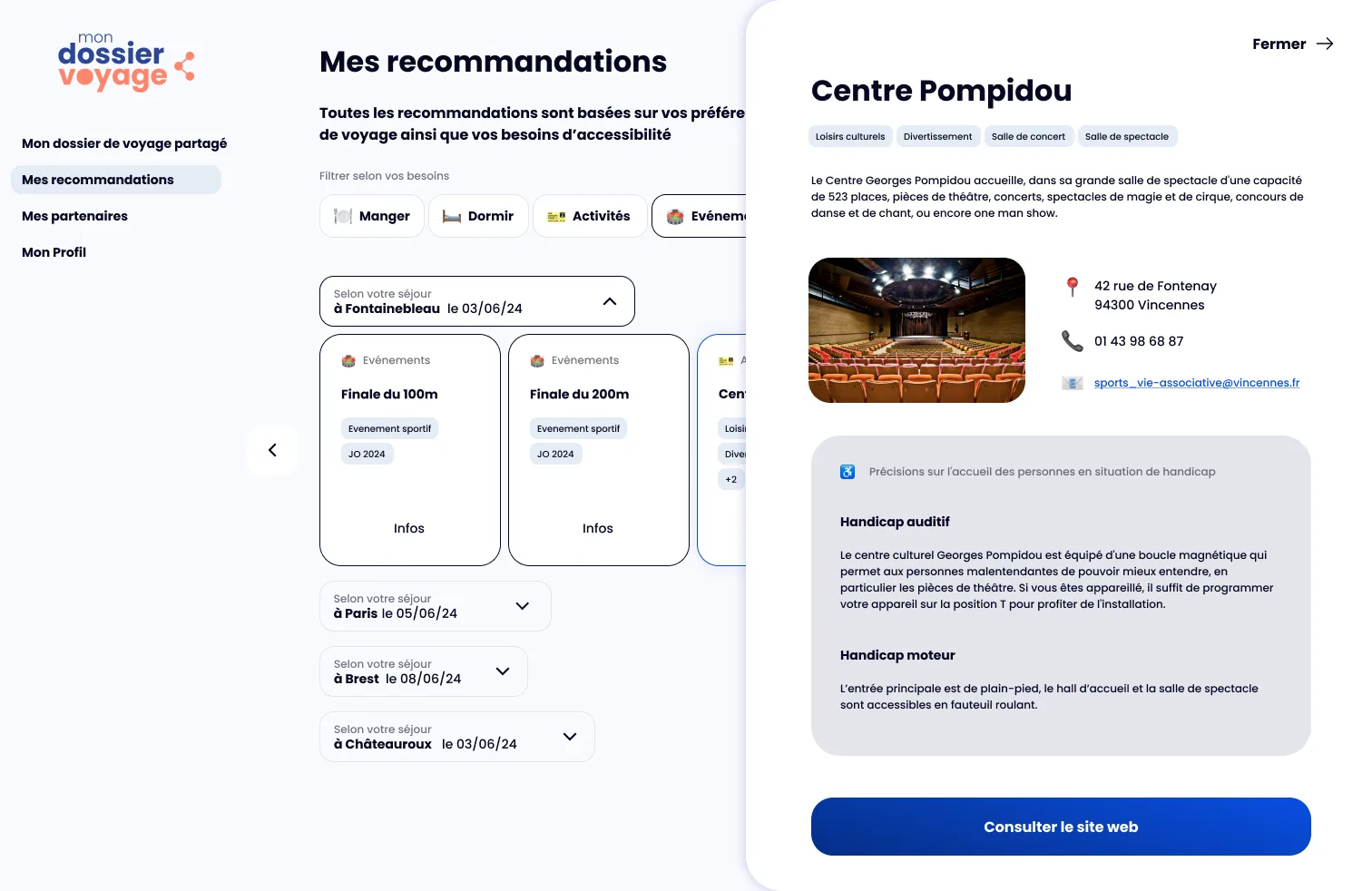
The engagement continued until September 2024 with a new piece: using the travel profile and the accessibility needs to suggest suitable places, activities or events.
That extension could draw on different tourism sources, public or private, to match the characteristics of a place against the needs a traveller had expressed.
What this first version made possible
The aim of this first phase was not to connect the entire travel industry before the Paris Games. It was to make the model concrete.
Within a few weeks, Themis-X had a working application, an operational data space connector and an experience complete enough to show the other players in the ecosystem how they could connect to it in turn.
The proof of concept with ADP went a step further, demonstrating a genuine handover between several organisations around the needs of one traveller. The extension into tourism recommendations then showed that the same data could also be used to offer a more personalised experience during the trip.
By the end of our engagement in September 2024, Themis-X had a product and technical foundation advanced enough to keep developing its travel vertical.
Do you have a use case to turn into a first usable version?